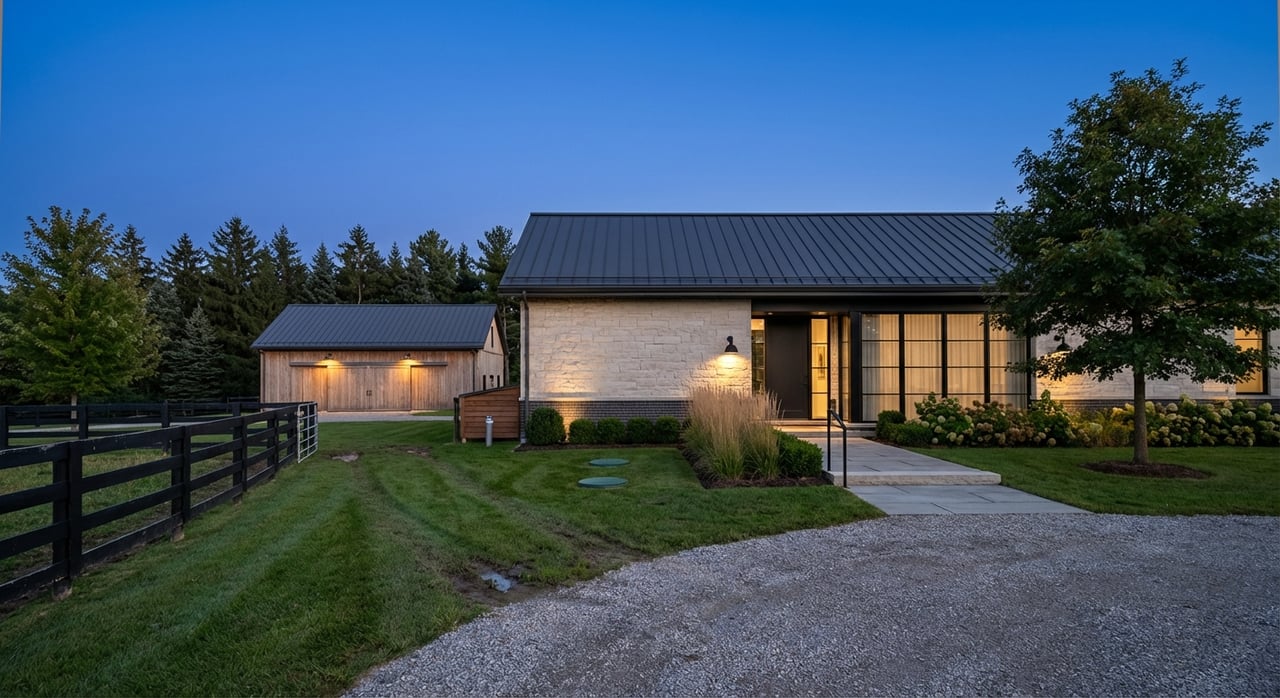
Dreaming of more land, a quieter setting, and space for your horses in Homer Glen? You are not alone. Acreage and equestrian properties can be a great fit here, but they come with rules and risks you do not encounter with typical suburban homes. In this guide, you will learn the zoning essentials, well and septic requirements, soil and flood checks, barn safety, insurance basics, and a step-by-step due-diligence plan tailored to Homer Glen and Will County. Let’s dive in.
Confirm jurisdiction and zoning
Buying acreage starts with a simple but critical step: confirm whether the property sits inside the Village of Homer Glen or in unincorporated Will County. Parcels in the Village follow the Village Zoning Code and permit processes. Parcels outside the Village follow Will County rules. Use the official Village of Homer Glen Zoning Map to verify the boundary and zoning label before you rely on any rule.
Once you know the jurisdiction, review the relevant regulations. The Village code sets specific standards for animal keeping, private stables, setbacks, and nuisance controls. You can browse the Village of Homer Glen zoning code for details and definitions.
For site utilities and health approvals in the county, you will work with Will County’s departments. If you need a starting point for local contacts, see the Will County Health Department page.
Homer Glen animal and stable basics
If the parcel is inside Village limits, these rules matter most:
- Minimum lot size. Private stables, horse boarding, and indoor arenas require at least 2 acres under Village standards. Some residential districts may need special-use approval. See the Village zoning code for your district’s details.
- Horse counts. For boarding that involves payment, you may board up to three non-owned horses provided the total number of horses on the lot does not exceed one per acre.
- Structure placement. Animal structures typically must maintain at least a 50-foot setback from property lines and meet rear-yard setbacks.
- Design and access notes. The code includes unusual limits for private stables. It does not allow overhead doors on private stable structures, and it restricts certain hard-surface access types to a stable. Review the text closely for your plan.
- Mixed livestock. In agricultural districts the Village applies an animal-unit table that assigns how many mature animals per acre are allowed. This matters if you plan to keep species beyond horses.
- Covenants still apply. Village approvals do not override private covenants or HOA rules. Recorded restrictions can prohibit horses even if the code allows them. Always request and read the title report and covenants.
Special uses and prior approvals
Before you write an offer, call zoning staff to check:
- The exact zoning label and whether any special-use permits or variances are tied to the property.
- How horse boarding, instruction, or events are treated for your zoning district.
- Any enforcement history, easements, or conditions that could limit animal keeping.
Start with the Zoning Map, then use the Village zoning code to confirm allowable uses and permit triggers.
Well and septic essentials
Many acreage properties rely on private well and septic systems. These are safe and common when designed and maintained correctly, but you must verify capacity, permits, and water quality.
Septic systems in Will County
Will County requires a sewage permit for installation and repair, and a site soil evaluation before it accepts a new permit application. The application must include a scaled plan showing wells, buildings, property lines, and the system layout. Permits are not transferable. Review the county requirements here: Will County septic permits.
Your septic checklist:
- Ask the seller for the septic permit, as-built drawing if available, and any repair records.
- Hire a qualified septic inspector to assess the tank, pump components, distribution box, and drain field condition.
- Confirm the approved bedroom capacity aligns with your household.
- Get the date of last pumping and any maintenance history.
- If you plan an addition or higher occupancy, budget for a soil evaluation and a permit review for expansion or replacement.
Private wells and water testing
In Illinois, private well permits and inspections are administered locally using state standards. The Illinois Department of Public Health recommends testing private wells annually for bacteria and nitrate and testing periodically for metals. As a buyer, require at least a pre-closing bacteria and nitrate test. Learn what to test from the IDPH private well guidance.
What to request from the seller:
- Well construction information, well log, and pump installation records if available.
- Any past water test results and recent service invoices.
Soils and drainage
Soil types affect septic design, drainage, and even how you manage runoff from barns and paddocks. Use the USDA NRCS Web Soil Survey for a quick screening of mapped soils and drainage on the parcel. This is a useful early step. For permits, count on a formal on-site soil evaluation by qualified professionals.
Floodplain and wetlands check
Flood risk affects insurance, buildability, and septic or well siting. Pull the parcel on FEMA’s online viewer and note any Special Flood Hazard Area or floodway that touches the site. If any portion appears in a mapped flood zone, you will want an elevation certificate, a discussion with your insurer, and clarity on site limits before you proceed. Start with the FEMA Flood Map Service Center.
Barns, outbuildings, and access
Barns, run-in sheds, and arenas are often the heart of an equestrian property. They also carry unique safety and compliance issues.
- Permits and placement. Accessory structures must meet zoning setbacks and the applicable building review process. Ask to see building permits and final inspections for barns, sheds, and arena bases. The Village also requires that properties reserve enough land for proper sewage disposal and water supply that meet Will County Health Department standards. See the Village zoning code for how it treats private stables and accessory structures.
- Driveways and access. Confirm that your driveway can safely support deliveries and emergency vehicles. The Village code includes specific restrictions on the surfaces used to access a stable. Do not assume your intended access surface is allowed.
- Electrical capacity. Check barn service panels, circuits, lighting, and any heated areas. Verify that electrical work was permitted and inspected.
Fire safety in barns
Hay and bedding storage present a significant fire risk. NFPA 150 outlines life-safety and fire-protection goals for animal housing facilities. Practical takeaways include separating hay storage from stalls, maintaining outside access for firefighting, posting an emergency plan, and using detection or alarms. Larger facilities may consider sprinklers. Review key concepts in this overview of NFPA 150 barn fire safety.
When you tour a property, note how hay is stored, the condition of barn wiring, available water for suppression, and whether emergency access is clear.
Insurance and liability basics
Coverage varies widely between personal hobby use and paid activities. A standard homeowner policy might cover your dwelling and some detached structures, but it can exclude liability related to boarding, lessons, or non-owned horses.
Consider these categories:
- Homeowner coverage for your residence, barns, fencing, and personal-use horses.
- Farm or ranch policies if you keep larger operations or need broader property coverage.
- Commercial equine liability and Care, Custody, and Control coverage if you board, train, or teach for pay.
Consult an agent experienced in equine risks early and get written confirmation of coverage for your intended use. For a primer on common equine coverages, see this equine insurance resource.
Buyer due-diligence checklist
Use these items as pre-offer questions and as contract contingencies where needed. They will help you confirm feasibility and manage risk.
High priority
- Verify jurisdiction: Village of Homer Glen or unincorporated Will County, plus the exact zoning label.
- Request recorded covenants, deed restrictions, and easements in the title report. Private covenants can prohibit horses.
- Septic: obtain the septic permit and any as-built drawing. Schedule a full septic inspection.
- Well: require current bacteria and nitrate test results before closing. Ask for the well log and construction report.
- Property survey: confirm boundary lines and any shared-fence or access questions.
Medium priority
- Barn and outbuilding inspection: structure, roof, framing, and electrical. Confirm permits exist for each structure.
- Electrical capacity: verify barn panel size and circuits, plus permits for any generator or pump wiring.
- Soils: order a soil classifier report if you plan to add structures or expand a septic system. Screen soils first with NRCS.
- Flood and wetlands: check FEMA maps and ask for an elevation certificate if near a mapped area.
Lower but important
- Manure and odor management: document how manure will be stored and removed, and confirm compliance with local nuisance rules.
- Insurance pre-approval: confirm insurability for boarding, lessons, or events. Request a quote and written coverage summary.
Smart next steps
Follow this simple workflow to move from dream to done:
- Confirm jurisdiction and pull the zoning map and plat for the parcel using the Village resources.
- Ask the seller for septic permits, any as-built drawings, the well log and construction report, outbuilding permits, and recorded covenants.
- Screen the parcel for soils and flood risk using NRCS and FEMA. Flag any issues that need a specialist.
- Schedule inspections: general home, septic, well test, and barn or outbuilding structural and electrical reviews. Make findings part of your negotiation.
- Contact an insurance agent who writes farm and equine coverage to confirm your intended use is insurable.
- If you plan to board or teach, confirm any special-use requirements with the Village and discuss septic or well capacity with local health officials.
Your Homer Glen advantage
Buying acreage or an equestrian property should feel exciting, not overwhelming. With the right planning, you can protect your investment and set up your horses and household for success. If you would like help identifying on-market and private opportunities, coordinating inspections, or clarifying permits, we are here to guide you.
Have questions or want a property plan tailored to your goals? Connect with Christine Wilczek and Jason Bacza for expert advice on Homer Glen acreage and equestrian properties.
Sources and helpful links
- Village of Homer Glen Zoning Map: homerglenil.org
- Village of Homer Glen Zoning Code: ecode360.com
- Will County septic permits: codelibrary.amlegal.com
- IDPH private well testing: dph.illinois.gov
- NRCS Web Soil Survey: websoilsurvey.nrcs.usda.gov
- FEMA Flood Map Service Center: msc.fema.gov
- NFPA 150 barn safety overview: blog.qrfs.com
- Equine insurance basics: jarvisinsurance.com
- Will County Health Department contact hub: health-improve.org
FAQs
What lot size do I need to keep horses in Homer Glen?
- The Village generally requires at least 2 acres for private stables and related uses, and total horses cannot exceed one per acre under boarding rules.
Can I board horses for pay on a Homer Glen property?
- Yes, with limits. You may board up to three non-owned horses if the lot meets Village standards and total horses do not exceed one per acre; special-use approval can apply in some districts.
How do I verify a septic system before closing in Will County?
- Request the septic permit and any as-built, then hire a qualified septic inspector to evaluate the tank, components, and drain field capacity.
Do private wells need testing when I buy acreage?
- Yes. At minimum, request pre-closing tests for bacteria and nitrates, then plan to test annually as recommended by state health guidance.
What insurance do I need if I plan to teach lessons or board horses?
- Beyond a homeowner policy, look at farm or ranch coverage plus equine liability and Care, Custody, and Control for non-owned horses; confirm coverage in writing.
How can I screen soils and flood risk before making an offer?
- Use the NRCS Web Soil Survey to review mapped soils and drainage, then check FEMA’s Flood Map Service for any Special Flood Hazard Areas that touch the site.