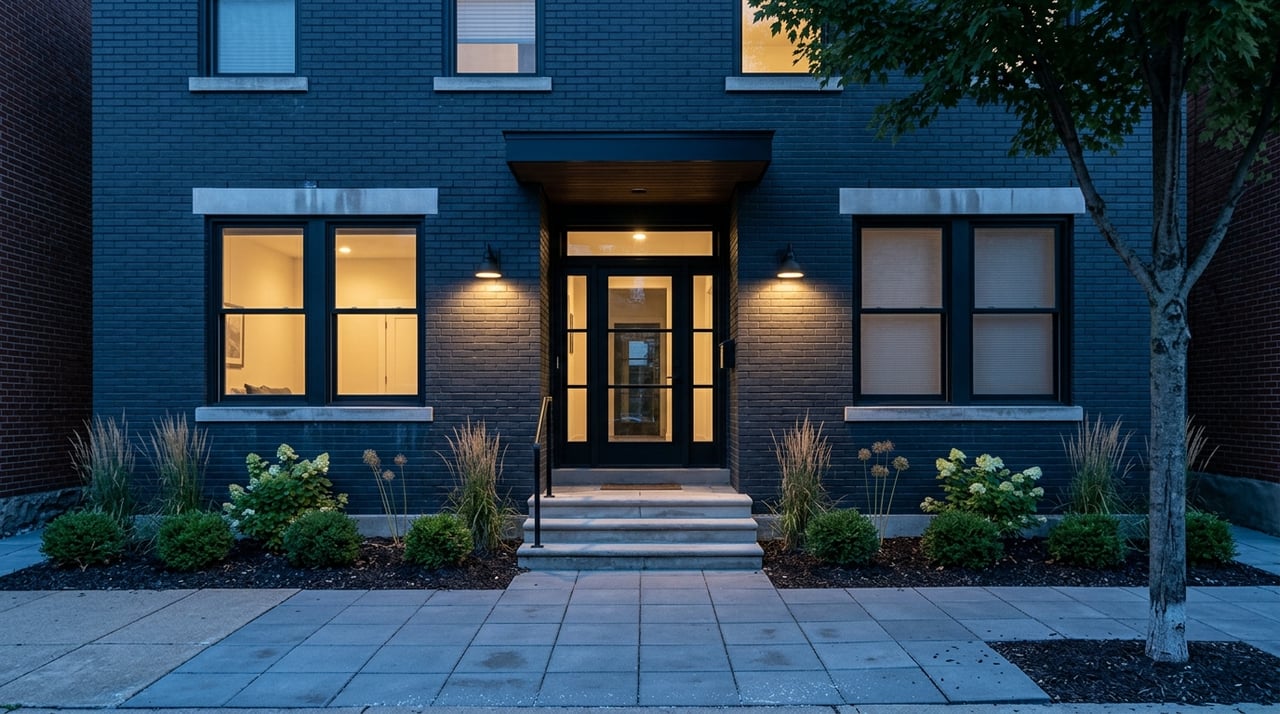
If you are looking at a duplex, small multifamily, or mixed-use property in Lockport, the numbers can look promising at first glance. But in a market this size, a good investment usually comes down to careful rent testing, realistic expense planning, and a clear read on local rules. This guide will help you evaluate small investment properties in Lockport with a more practical lens so you can spot opportunities, avoid thin deals, and make more confident decisions. Let’s dive in.
Why Lockport draws investor interest
Lockport offers a middle-ground opportunity in the south and southwest suburban market. It is not a large rental-heavy city, but it does show rent levels that are competitive with several nearby suburbs. That can make it appealing if you want suburban stability without chasing the highest-risk value-add play.
The city had 26,094 residents in the 2020 Census and 9,903 households in the 2020-2024 ACS. Median household income was $111,981, the owner-occupied housing unit rate was 84.6%, and median gross rent from Census data was $1,525. Because owner occupancy is high, rental comps may be less plentiful and more sensitive to condition, layout, and location than in a larger rental market.
Start with current rent reality
When you evaluate a small investment property, your rent assumptions should come from live market snapshots first. In Lockport, those current figures are meaningfully higher than the older Census rent number. That gap matters because relying on a single older benchmark could distort your underwriting.
Zillow’s June 2026 snapshot showed an average rent of $2,100 with 35 rentals and no month-over-month change. Realtor.com’s April 2026 market page showed 34 homes for rent and a median rent of $2,318. Those figures suggest a market where asking rents generally sit in the low-to-mid $2,000s.
Bedroom-level snapshots help refine that estimate. Trulia’s May 2026 figures showed:
- 1-bedroom units at $1,450
- 2-bedroom units at $1,850
- 3-bedroom units at $2,500
- 4-bedroom units at $2,801
Rentometer’s May 29, 2026 snapshot came in a bit higher:
- 1-bedroom units at $1,775
- 2-bedroom units at $2,204
- 3-bedroom units at $2,512
- 4+ bedroom units at $2,971
The takeaway is simple: do not underwrite from one headline rent number alone. Test each unit against several current comps that match bedroom count, condition, and property type as closely as possible.
Understand Lockport’s rental depth
Lockport can support rental property, but it is not a high-volume rental city. Realtor.com reported that rental count in Lockport rose 61.54% year over year while median rent rose 6.77% year over year. That points to more visible rental supply than a year ago, though still within a relatively small market.
For investors, that means leasing assumptions should stay conservative. If a property sits vacant for a bit longer than expected, or if a renovated unit does not achieve top-of-market rent right away, your deal still needs to hold together.
Zillow labeled the market cool in its June 2026 snapshot. In practical terms, that supports the case for cautious underwriting rather than aggressive projections.
Compare Lockport to nearby suburbs
Looking at nearby markets can help you understand where Lockport sits in the local rent spectrum. It is not the cheapest option in the area, but it is also not the most supply-constrained. That middle position can be useful for investors who want a suburban asset with reasonable rent support.
Here is how Realtor.com snapshots compare:
| Market | Median Rent | Rental Count |
|---|---|---|
| Lockport | $2,318 | 34 |
| Joliet | $1,800 | 130 |
| Crest Hill | $1,369 | 33 |
| Romeoville | $2,265 | 74 |
| New Lenox | $2,365 | 28 |
| Lemont | $2,375 | 10 |
This puts Lockport above Joliet and Crest Hill on rent, close to Romeoville, and near New Lenox and Lemont. At the same time, it has far less rental depth than Joliet and more than Lemont. That is why Lockport often makes the most sense when you want a stable suburban play and the property works on conservative numbers from day one.
Check the property’s legal use first
Before you get too far into pro forma math, verify that the current or planned use fits Lockport’s zoning rules. This is especially important if you are evaluating a mixed-use property, adding units, or converting a building to a new use.
Lockport’s zoning code states that R-4 is the city’s multiple-family district and is intended for multiple-family development near commercial centers and higher-volume roads. The code also indicates that multiple-family dwellings are permitted in R-3 and R-4 and treated as a special use in R-O and C-3. Dwelling units above ground-floor retail are permitted in C-1, C-2, C-2T, and C-4, while C-3 requires special use treatment.
If your deal depends on a use change, added density, or a mixed-use concept, that zoning review should happen early. A property can look attractive on paper and still become a weak investment if the intended use is not straightforward.
Model parking before you make an offer
Parking can materially affect feasibility in Lockport. If you overlook it, your layout, unit count, or mixed-use concept may not pencil out as expected. This is one of the most important checks for small multifamily and downtown-style properties.
The base parking schedule sets multiple-family dwellings at 1.25 spaces per unit. Single-family attached or detached dwellings require 2 spaces per dwelling. For existing structures in C-4, residential uses require only 1.25 parking spaces per unit, and certain nonresidential uses require no accessory off-street parking.
That difference can matter a lot. If your plan relies on C-4 parking relief, or if a property would be treated differently under another use category, build that into your due diligence before you assume future value.
Budget for registration and inspections
Lockport requires every owner or landlord of rental property to register before occupancy. Registration must be renewed annually, and changes must be reported within 10 days. The city also authorizes inspections, and refusal of access for inspection is a violation.
The annual registration fees are:
- $50 for one unit
- $90 for two units
- $125 for 3 to 5 units
- $150 for 6 to 15 units
- $200 for 16 to 25 units
- $300 for 26 or more units
If the owner or landlord does not live within 25 miles, the registration must include a 24-hour property manager contact. There is also an exclusion for a duplex where the owner lives in one of the two units, which is not treated as rental property under this ordinance.
These are not huge line items in most cases, but they still belong in your operating budget and compliance checklist.
Watch rehab costs closely
Value-add opportunities in Lockport can work, but only when your renovation budget reflects local code and permit realities. This is where many small deals get thinner than they first appear.
Lockport’s building regulations adopt the 2024 International Building Code, Residential Code, Existing Building Code, Mechanical Code, Fire Code, and Property Maintenance Code, along with the 2023 National Electrical Code and Illinois energy, plumbing, accessibility, and life-safety codes. The city also has building-permit fees, contractor bond requirements, certificate-of-occupancy permits, and Fire District review fees.
If your project triggers code-compliance upgrades, those costs can move quickly. Electrical, plumbing, accessibility, energy, and life-safety work should be treated as real underwriting items, not a vague contingency bucket.
Know when sprinklers may affect the deal
For attached two-family dwellings, the residential code requires an automatic residential sprinkler system. Lockport exempts additions or alterations to existing two-family buildings that are not already sprinklered, but that exemption does not mean every two-family project avoids this issue.
If you are planning an attached two-family conversion or new two-family product, include sprinkler design and installation costs in your budget from the beginning. This one requirement can materially change whether a small project still makes sense.
Build time into the approval process
Some deals look fine financially but still run into timing issues. In Lockport, if a project becomes a multiple-family or nonresidential application in R-3, R-4, or C-1, the city requires conventional site plan review.
That does not mean the deal is bad. It means your timeline should account for another layer of review before you assume a smooth closing-to-construction path.
A practical underwriting checklist for Lockport
When you evaluate a small investment property here, use a checklist that goes beyond price and rent. A disciplined process can help you avoid the common mistakes that make a suburban deal feel tighter after closing.
Focus on these items:
- Verify zoning district and whether the current or planned use is permitted or special use
- Confirm parking requirements based on actual use classification
- Budget annual rental registration fees and inspection-related compliance
- Include building permits, certificate-of-occupancy costs, contractor bond requirements, and Fire District review fees
- Add realistic code-compliance capital costs for electrical, plumbing, accessibility, energy, and life-safety work
- Price sprinkler costs if the project involves attached two-family construction or conversion
- Allow for site plan review timing where required
- Underwrite rents from current live comps, then compare back to broader market benchmarks as a reasonableness check
What makes a Lockport deal worth pursuing
In this market, the strongest small investment properties usually are not the ones with the flashiest upside story. They are the ones that still make sense when you use conservative rent assumptions, realistic renovation costs, and full compliance expenses.
That is especially true because Lockport is not a deep-discount market and not a large, highly liquid rental city. If your pro forma depends on aggressive rent growth, thin parking assumptions, or skipped permit and registration costs, the margin for error may be too small.
A better approach is to look for properties where the existing layout, zoning, parking, and rent potential already support the investment case. When the basics work first, any upside becomes a bonus rather than a rescue plan.
If you are weighing a duplex, mixed-use building, or small multifamily opportunity in Lockport, working with advisors who understand suburban Chicago pricing, feasibility, and local positioning can help you move with more clarity. To discuss a property, local market trends, or off-market opportunities, connect with Christine Wilczek and Jason Bacza.
FAQs
What rents should you expect for a small investment property in Lockport?
- Current market snapshots place Lockport asking rents generally in the low-to-mid $2,000s, with bedroom-level figures varying by source, unit size, and condition.
What makes Lockport different from a larger rental market?
- Lockport has a high owner-occupied housing share and a relatively small rental inventory, so comparable rents can be thinner and more sensitive to property condition and layout.
What rental registration rules apply in Lockport?
- Rental property owners or landlords must register before occupancy, renew annually, report changes within 10 days, and comply with inspection access requirements, with fees based on unit count.
What zoning issues should you check for a Lockport investment property?
- You should confirm the zoning district, whether the current or planned use is permitted or requires special use approval, and whether a mixed-use or added-unit concept triggers further review.
What rehab costs can affect a Lockport small multifamily deal?
- Permit fees, certificate-of-occupancy costs, Fire District review fees, contractor bond requirements, and code-compliance upgrades for electrical, plumbing, accessibility, energy, and life-safety items can all affect your budget.
What parking rules matter for Lockport investment properties?
- Lockport generally requires 1.25 spaces per unit for multiple-family dwellings, while single-family attached or detached dwellings require 2 spaces per dwelling, and some existing C-4 structures may have more flexible parking treatment.
When should you be cautious about a Lockport investment property?
- You should be cautious when the deal depends on aggressive rent growth, unclear zoning, tight parking assumptions, or renovation budgets that do not fully account for registration, permits, inspections, or sprinkler requirements.