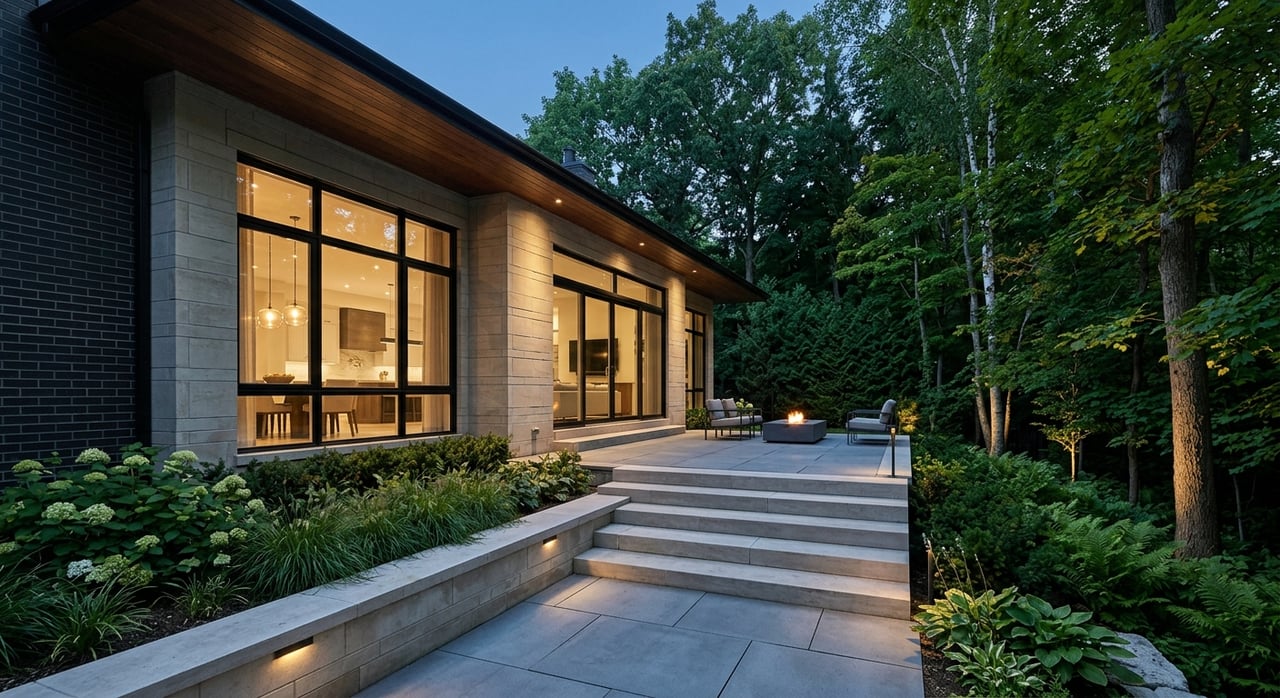
Are you drawn to the idea of waking up near wooded trails, quiet roads, and a little more breathing room? If you are considering Palos Park, living near the forest preserves can offer a very different feel from many surrounding suburbs. The key is knowing what that lifestyle actually looks like day to day, along with the tradeoffs that come with it. Let’s dive in.
Why Palos Park Feels Different
Palos Park stands out because of its setting. According to the village, the Cook County Forest Preserves surround the community on three sides, helping shield it from heavier suburban development and giving it a more timeless, wooded character.
The village describes Palos Park as a small, mostly residential community of more than 4,800 residents. Large sections of the village border nearly 11,000 acres of Forest Preserve land, and broader local trail information describes the Palos preserve area as nearly 14,000 acres. A Forest Preserves of Cook County planning document places the larger Palos-Pulaski Complex at about 15,000 acres, making it the biggest forest-preserve complex in Cook County.
That scale matters when you are thinking about daily life. You are not just living near a small neighborhood park. You are looking at a landscape of woodlands, prairies, ravines, hills, creeks, lakes, ponds, and sloughs that shapes the feel of the entire area.
What Daily Life Near the Preserves Can Look Like
For many buyers, the biggest appeal is lifestyle. Palos Park presents itself as a natural retreat, with access to places like the Cal-Sag Trail, the Swallow Cliff trail area, and nearby lakes including Horsetail Lake.
This means your routine can look a little different here. A walk, bike ride, or trail run can become part of an ordinary weekday instead of something you save for the weekend. The village also notes that some residents use the trails to train for races, which speaks to how integrated outdoor activity can be in daily life.
The trail network supports more than one kind of recreation. Forest Preserves of Cook County materials describe the Palos trail system as an unpaved network of limestone gravel and natural-surface trails used by hikers, bikers, horseback riders, and cross-country skiers.
That variety gives Palos Park broad appeal. You may want a quick walk with wooded views, a longer ride, or access to more rugged terrain and scenic overlooks. The preserve system offers a wide range of route lengths and difficulty levels, so the experience can feel flexible rather than one-size-fits-all.
Trails and Regional Connections
One of the area’s major assets is the Cal-Sag Trail. The village describes it as a 26-mile multi-use path built along the Cal-Sag Channel and Calumet River.
This trail is designed to connect communities to regional trails, transit systems, parks, forest preserves, marinas, and nature centers. If you value outdoor access that stretches beyond your immediate neighborhood, that kind of connection can be a meaningful part of the lifestyle.
Winter Use Still Matters
The preserves are not only a warm-weather feature. Palos Park notes that some preserve areas are designated for sledding and coasting when snow conditions allow, and Swallow Cliff offers cross-country skiing, a warming shelter, and heated restrooms.
The village also points to numerous skiing locations between Archer Avenue and 135th Street in the Willow Springs and Palos Park area. For buyers who enjoy four-season outdoor access, that is worth noting because the area stays active in winter rather than going quiet.
The Benefits Buyers Often Notice First
Living near forest preserve land can be appealing for reasons that go beyond recreation. In many cases, buyers are drawn to the sense of privacy, the wooded views, and the more retreat-like setting these homes can offer.
In Palos Park, that appeal is closely tied to the village’s physical layout. Because the preserves help frame the community, many homes feel more removed from busier development patterns than you might expect this close to the broader Chicago metro area.
Common advantages can include:
- More natural buffers around parts of the village
- A quieter, more wooded visual setting
- Easier access to trails and outdoor recreation
- A lower-density feel than many nearby suburban areas
- Strong appeal for buyers who value scenery and open space
Of course, not every home experiences those benefits in the same way. A property on a quiet interior street may feel very different from one close to a busy trail access point or a more active roadway.
The Tradeoffs to Think Through
The setting is a major strength, but it also comes with practical questions. If you are serious about living near the preserves in Palos Park, it helps to look past the scenic first impression.
One of the biggest considerations is access. Forest Preserves planning documents note that the Palos trail system is complex, with many possible routes, and wayfinding can sometimes be difficult.
Parking is described as ample but spread out, and common access runs through corridors like Archer Avenue, LaGrange Road, or 95th Street. In real life, that means convenience can depend a lot on your exact street, your preferred trailhead, and how often you want to use the preserves.
Seasonal Conditions Can Change Your Routine
The experience of living near wooded land shifts with the seasons. Trails and access points may feel easy and inviting at one time of year and more complicated during another.
The Forest Preserves’ 2026 capital plan also notes that major improvements to the Swallow Cliff and Palos trail system are in engineering design, with work at Swallow Cliff scheduled to start in 2026. Improvement projects can be positive long term, but they can also temporarily affect access and trail conditions.
Tick Awareness Is Part of the Lifestyle
If you spend time on wooded trails, tick prevention should be part of your routine. The Illinois Department of Public Health says the blacklegged tick, also called the deer tick, is the most common tick in Illinois that can make people sick.
IDPH advises using insect repellent, staying in the center of trails, and checking for ticks after time outdoors. The agency also says lone star ticks are found in wooded areas along trails and are most active from April through July.
This does not mean outdoor living is a problem. It simply means preserve-adjacent living comes with a few practical habits that help you enjoy the setting more safely.
How the Preserves Can Influence Home Value
Many buyers assume that backing to open space always raises value. The reality is more nuanced.
A 2019 review of U.S. studies found that home values often rise as proximity to a park increases, but the relationship is not perfectly linear. In some cases, homes immediately adjacent to a park receive a lower premium than homes a block or two away.
Research cited in conservation-easement literature also found that proximity to preserved forest land can be valuable to nearby homeowners, and one study of vacant residential building lots found that being near a forest preserve was reflected in sale prices. In short, open space often supports value, but the exact effect depends on the property and its location.
In Palos Park, current market data also points to strong demand. Zillow estimated the average home value at $539,050 as of April 30, 2026, up 9.4% year over year. Redfin reported a median sale price of $651,164 for April 2026, up 47.3% year over year, and Realtor.com described Palos Park as a seller’s market in March 2026.
Why One Preserve-Adjacent Home May Outperform Another
When buyers compare homes near the preserves, details matter. Pricing is likely influenced by factors like lot depth, privacy, maintenance needs, trail access, and whether the home sits directly on a trail edge or on a quieter interior street.
That is why two homes with a similar “near the preserves” label may not command the same response from buyers. A good valuation has to go beyond the headline feature and look at how that setting actually functions for the homeowner.
What to Look For Before You Buy
If you love the idea of living near the preserves, it helps to evaluate each property with both lifestyle and resale in mind. The goal is to find a home that gives you the setting you want without creating avoidable friction.
As you tour homes, consider:
- How close the property is to a trailhead or preserve edge
- Whether access feels easy for your routine
- If the street feels quiet or sees heavier visitor traffic
- How much privacy the lot really offers in different seasons
- Whether outdoor maintenance may be higher because of trees or natural surroundings
- How comfortable you are with seasonal issues like ticks, snow, and changing trail conditions
These details can shape your daily experience just as much as square footage or finishes. In a place like Palos Park, the land around the home is often part of the value story.
Why Local Guidance Matters in Palos Park
Buying near the forest preserves is not just about finding a house with a pretty backdrop. It is about understanding how a specific location lives, how buyers perceive it, and how that may affect future resale.
That is especially true in a market where demand remains strong and setting can play a major role in buyer interest. A home near the preserves may feel private and scenic, but the best fit usually depends on the block, the lot, and the way you plan to use the surrounding outdoor space.
If you are thinking about buying or selling in Palos Park, working with professionals who understand the local market can help you weigh those details with confidence. For tailored guidance on homes, pricing, and preserve-adjacent opportunities in Palos Park, connect with Christine Wilczek and Jason Bacza.
FAQs
What is it like living near the forest preserves in Palos Park?
- Living near the forest preserves in Palos Park often means a wooded, lower-density setting with convenient access to trails, outdoor recreation, and seasonal activities, along with practical considerations like trail access, ticks, and changing conditions throughout the year.
Do homes near the forest preserves in Palos Park always sell for more?
- Not always. Research shows that proximity to open space often supports value, but the premium is not perfectly consistent and can depend on factors like privacy, lot layout, maintenance, and whether the home sits directly on the preserve edge or slightly farther away.
What outdoor activities are available near the preserves in Palos Park?
- The area supports hiking, biking, horseback riding, trail running, cross-country skiing, sledding, and access to regional routes like the 26-mile Cal-Sag Trail.
What practical concerns should buyers consider near Palos Park trails?
- Buyers should think about trail access, wayfinding, visitor traffic near trailheads, seasonal changes, parking patterns, outdoor maintenance, and tick prevention when evaluating homes near the preserve system.
Are trail conditions and access in the Palos area expected to change?
- Yes. Forest Preserves planning documents note that major improvements to the Swallow Cliff and Palos trail system are in design, with work at Swallow Cliff scheduled to begin in 2026, so access and conditions may shift during improvement projects.